
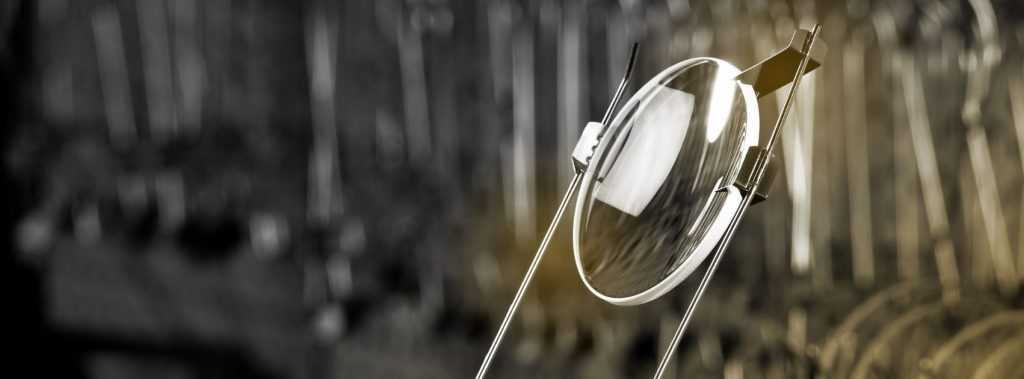
You have no doubt heard of both bifocals and varifocals, but do you know the difference between the two? Read on to find out more.
Bifocals
Bifocals have been around for a long time! Early designs are documented as far back as the late 1700s, with the invention widely credited to American statesman Benjamin Franklin.
The story goes that he came up with what he called his ‘double spectacles’ after becoming bored of switching between two different pairs to help his near or far vision. When you look at a bifocal lens you can see a visible segment for distance and for reading.
While they combine these two requirements in one pair, they do not correct the middle ground. Bifocals are still used by many today but usually for existing users or those with certain specific requirements or situations.
Varifocals
Varifocals are much newer, coming onto the market in the 1960s. They are designed for people who need their vision corrected for multiple distances.
Unlike bifocals if you look at a pair of varifocals the different areas of power aren’t obvious. Instead, there is a smooth transition between the upper part of the lens which is for distance, the middle which is intermediate and the lower area for near vision.
This means you can easily switch between various activities without needing multiple pairs of frames.
Patrick & Menzies Partner and Dispensing Optician Dan Edwards explained: “Adjustment to varifocals can take a bit of time, as you must learn to look through the right part of the lens for the right task. Although the vast majority of people get on fine with them, we always urge patients to let us know if they are struggling to adjust.
“In recent years varifocals have progressed amazingly, improving optical performance, and options available to suit all budgets. As you might expect, generally the more you pay the easier they usually are to adjust to. This is because better quality lenses have a wider field of vision which results in less peripheral distortion.
“Finding the right lens for you will depend on your budget but also your lifestyle – for example an HGV driver’s needs would be different to a teacher’s. How complicated your prescription is will also have an impact. People with more complex needs usually find higher quality lenses easier to adapt to.”
Choosing the right frame
For varifocals, the size of the frame is less of a consideration than it used to be. In the past you would have had to choose frames that were quite deep to fit the prescription, but over the past few years, technology has moved on a pace and now it’s difficult to find a frame that you can’t fit varifocals into. But don’t worry! The Patrick & Menzies team will be on hand to offer advice, so you pick frames that suit your prescription.